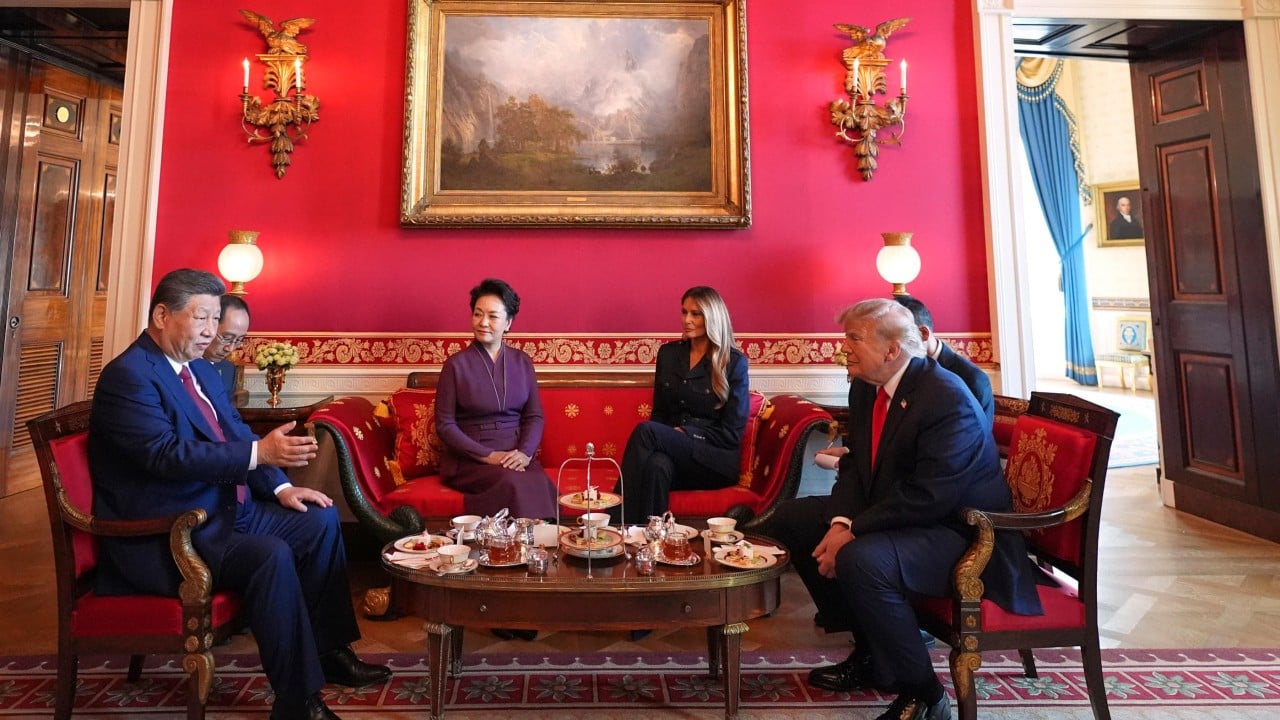
When Chinese President Xi Jinping landed in the United States after a roughly 13.5-hour journey from Beijing, he arrived hours faster than Donald Trump did on his return trip from China earlier in May. During a private tea gathering in the White House Red Room, Trump remarked on the remarkable speed of the Chinese leader's aircraft. Xi quickly pointed out the real reason for the speed difference: the flight path.
The shorter travel time wasn't about a superior engine or a secret aerospace breakthrough. It came down to geopolitics, geography, and an airspace ban that has upended global aviation.
The Geopolitical Route Advantage
Xi's modified Boeing 747 took a path crossing through Russian airspace, Alaska, and Canada. That direct line shaved hours off the total time.
By contrast, when Trump flew to Beijing in May aboard Air Force One, the trip took nearly 18 hours, not even counting an obligatory 1.5-hour refueling stop in Alaska. When Trump returned from Beijing, his flight still dragged out to close to 16 hours.
The discrepancy exists because of an ongoing aviation cold war. Following the start of Russia's full-scale invasion of Ukraine in 2022, Moscow banned US and various other foreign airlines from utilizing its airspace. Western nations imposed matching restrictions on Russian carriers.
The Double Standard in Commercial Skies
While American commercial and government aircraft must take long detours to bypass Russian territory, Chinese airlines enjoy a different reality. Beijing's carriers are permitted to operate designated weekly round-trip flights through Russian airspace on routes linking China and North America.
This creates a major operational imbalance. Russian airspace offers the shortest great-circle routes connecting Asia and North America. Skipping it burns extra fuel, increases crew fatigue, and adds massive costs for Western carriers.
Airlines for America, the trade group representing major US carriers like United, Delta, and American Airlines, has repeatedly called out the situation as deeply unfair. Chris Sununu, heading the organization, pointed out that the detour imposes a severe financial penalty on US operators trying to compete on transpacific routes.
What This Means for Future Direct Flights
During the official White House welcome ceremony, Xi pressed for expanding the number of direct flights between the US and China to boost trade and tourism. Both nations currently cap each other at 50 weekly round-trip flights—a steep drop from the 150-plus weekly passenger trips standard before 2020.
Yet, American aviation executives oppose expanding direct capacity while the Russian airspace restriction stands. They argue that giving Chinese airlines unfettered access to shorter routes while tying American hands creates an unplayable market disadvantage.
Washington has weighed counter-measures, including proposals to block Chinese carriers from flying over Russia on US-bound paths. Beijing counters that such restrictions only hurt everyday travelers and diplomatic exchanges.
Geography and airspace politics will continue to dictate who gets across the Pacific faster, turning a simple flight path into a glaring symbol of shifting global leverage.


