Security alarms rang loud in southwestern England when five men were hauled in by counter-terrorism officers near an active military installation. RAF Fairford in Gloucestershire houses American bombers. But within hours of a sweeping police lockdown, bomb squad robots, and frantic media speculation pointing fingers toward Tehran, every single suspect walked out on bail.
Iran didn't stay quiet. The Iranian embassy in London fired back fast, calling the anonymous leaks and state-sponsored conspiracy theories a classic playbook of Iranophobia.
Let's look at what actually happened on the ground and why this strange incident exposes the fragile state of modern intelligence reporting.
What Triggered the RAF Fairford Security Lockdown
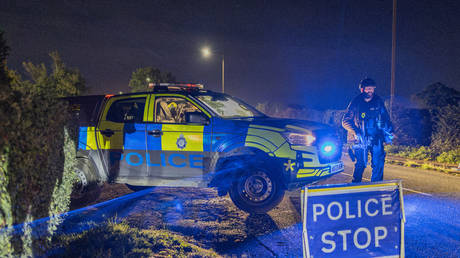
Police swooped on a wooded area near RAF Fairford after receiving reports of suspicious vehicles. White vans parked near the perimeter fence instantly drew the attention of local authorities. Because the base hosts strategic U.S. military assets flying complex regional missions, protocols are tight.
A bomb disposal squad rolled in. They deployed a remote-controlled robot to inspect the parked vans, cordoned off surrounding roads, and created an immediate information vacuum. In that vacuum, unnamed security sources told wire services that investigators were eyeing foreign state involvement.
Naturally, media outlets started connecting dots to Iran and Russia. The narrative wrote itself.
The Swift Release and Missing Evidence
The panic didn't last. Laurence Taylor, head of the UK’s National Counter Terrorism Policing, confirmed that after extensive interviews and checks, all five arrested men were released on bail.
Think about that timeline. Five men are arrested on suspicion of preparing a terrorist act—a severe charge under British law—only to be released almost immediately because the case lacked substance. No charges were filed. No explosives were officially reported found in the vans. Yet, the initial headlines had already served their purpose, planting the idea of a foreign-backed plot into the public consciousness.
British officials suggested they were checking if the suspects acted as state proxies, knowingly or unknowingly. But throwing out broad accusations without hard evidence creates a dangerous game of public speculation.
Tehran Response and the Iranophobia Charge
Tehran’s diplomatic mission in London didn't mince words. They released an official statement on social media rejecting the claims completely. They labeled the speculations malicious, unfounded, and designed to fuel systemic Iranophobia across British institutions and media.
Tensions between London and Tehran have been ice-cold for years. Back in July, the Islamic Revolutionary Guard Corps issued a stern warning stating that the UK would become a legitimate target if it directly supported American bombing campaigns in the Middle East. Iran has shown it will strike back at regional neighbors hosting U.S. assets.
However, jumping straight to conclusions about a domestic UK sabotage cell without concrete proof highlights a knee-jerk reaction in Western security reporting. Whenever an incident happens near a sensitive site involving American power projection, foreign adversaries become the default suspects.
What This Incident Tells Us About Modern Intelligence Leaks
When anonymous sources feed unverified theories to journalists, the public gets a distorted view of actual threats.
- The Leak First Strategy: Authorities often hint at foreign state involvement before any investigation concludes, testing public reaction or signaling political intent.
- The Rapid Deflation: Real terror plots rarely end with every suspect walking free on bail the next day after routine interviews.
- The Geopolitical Cost: Unfounded accusations poison diplomatic channels further, making actual conflict prevention harder.
If you're tracking international security, don't buy into the initial panic of breaking news tickers. Wait for the dust to settle, look at who gets released, and watch how quickly dramatic terror plots quietly vanish into routine police bail extensions.