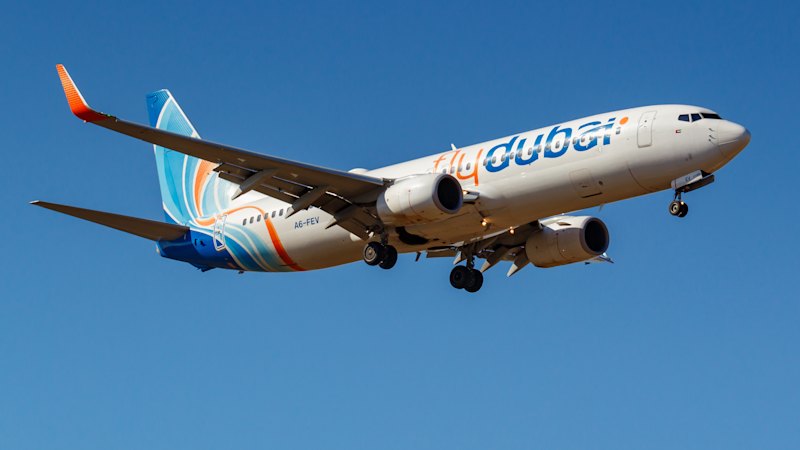
A commercial flight shouldn't become a crime scene. Yet, when flydubai flight FZ1073 raced through the skies toward Tel Aviv, passengers didn't just experience turbulence—they witnessed a bloody brawl inside the flight deck that triggered international security alarms.
For 90 harrowing minutes, aviation authorities across the Middle East tracked an aircraft plummeting off its normal cruising path. The Boeing 737 MAX dropped 14,000 feet in under 30 seconds. Israeli Air Force fighter jets scrambled. High-level emergency consultations kicked off in Jerusalem.
What actually happened inside that cockpit? Let's break down the chaos, the security failures, and what this incident means for modern air travel.
The Mid-Air Panic Over Flight FZ1073
The journey started routinely in Dubai. Flight FZ1073 departed at 7:05 AM local time, tracing a familiar path across the Persian Gulf toward Saudi airspace. Two hours into the trip, things went wrong.
According to flight tracking data from Flightradar24, the aircraft began erratic altitude fluctuations. Then came the sudden plunge—dropping 14,000 feet in less than half a minute. Transponder codes shifted rapidly. The crew first broadcast a standard 7700 emergency alert before switching to a 7500 code, the universally recognized signal for hijacking or unlawful interference.
Passengers heard the screams echoing from the front of the cabin. When crew members unlocked the flight deck door, the reality inside was gruesome. Reports from Israeli media outlets citing officials on the ground confirmed "blood in the cockpit" resulting from a stabbing attack involving a pocketknife.
Passengers and crew physically subdued the attacker, neutralizing the immediate threat before the plane made an emergency diversion to Tabuk in western Saudi Arabia.
Behind Closed Doors: The Pilot Altercation
Commercial cockpits are built like fortresses. Since the events of September 11, 2001, reinforced security doors have kept passengers away from the flight controls. But what happens when the threat originates from inside the locked door?
Initial intelligence assessments pointed toward a terrifying possibility. Unnamed Israeli officials told reporters there was a growing suspicion that one of the pilots intended to crash the aircraft. Other investigators examined potential mental health episodes or severe interpersonal conflicts boiling over at 35,000 feet.
Footage shared on social media by journalists like Amichai Stein showed the captain covered in blood, praised by passengers for keeping the plane from a catastrophic crash. Another crew member—reportedly the second pilot—was seen tied up and unconscious nearby.
Flydubai issued a brief statement confirming an "incident while en route" and noting that all passengers were safe. But the airline's silence on the specifics left a massive information vacuum, forcing intelligence agencies to piece together the timeline.
Emergency Response and High-Level Consultations
When a flight squawks 7500 near sensitive Middle Eastern airspace, national security apparatuses move instantly.
In Israel, Prime Minister Benjamin Netanyahu convened urgent consultations. IDF Chief of Staff Lieutenant General Eyal Zamir held high-level security assessments with senior military officers. Israeli airspace was briefly shut down as officials scrambled to understand if the flight was targeted by external terror networks or compromised from within.
Eylon Levy, a former Israeli government spokesman, captured the national tension: "For an hour, the whole of Israel held its breath as it looked like a Fly Dubai plane to Tel Aviv got hijacked over Saudi Arabia. Now it’s being reported the pilots got into a fight. The sonic boom from the sigh of relief can be heard in space."
Despite early statements from Israeli prime minister's office spokesperson Doron Spielman clarifying that it wasn't a traditional external hijacking, the operational reality remained grim. A flight deck brawl involving edged weapons shatters the core assumption of aviation safety: that the pilots are the ultimate safeguard against disaster.
The Blind Spot in Modern Flight Deck Security
Aviation security protocols focus heavily on exterior threats. Reinforced doors, strict background checks, and air marshals are designed to keep bad actors out.
They don't stop a pilot from snapping.
Mental health screening for commercial aviators remains notoriously opaque. While airlines mandate periodic medical exams, psychological evaluations often rely on self-reporting. Pilots facing severe personal stress, burnout, or psychiatric crises can easily slip through the cracks of a system that treats mental health as a career-ending taboo rather than a manageable medical condition.
When an internal crew member turns hostile, the physical barriers designed to protect the flight deck suddenly become traps. Passengers had to break through the barrier themselves to restore order. That points to a massive operational vulnerability that international aviation bodies like IATA and ICAO must address.
What Happens Next for Flydubai and Regional Aviation?
Flydubai faced immediate logistical challenges following the diversion. The budget airline arranged a replacement aircraft to fly to Saudi Arabia and transfer the stranded passengers onward to Tel Aviv.
Meanwhile, aviation authorities in Dubai, Saudi Arabia, and Israel launched joint investigations into how a pocketknife bypassed security screening or how an internal dispute escalated to physical violence in restricted airspace.
Expect tougher scrutiny on crew screening procedures. Expect renewed debates over cockpit monitoring systems and emergency override codes that ground crews can operate remotely if a flight deck becomes compromised.
If you fly frequently, incidents like this are an unsettling reminder that the biggest risks in aviation aren't always mechanical failures or weather events. Sometimes, the danger is sitting right in the pilot's seat. Check your airline's safety records, stay aware of security policy shifts, and demand better psychological oversight for the people flying your plane.