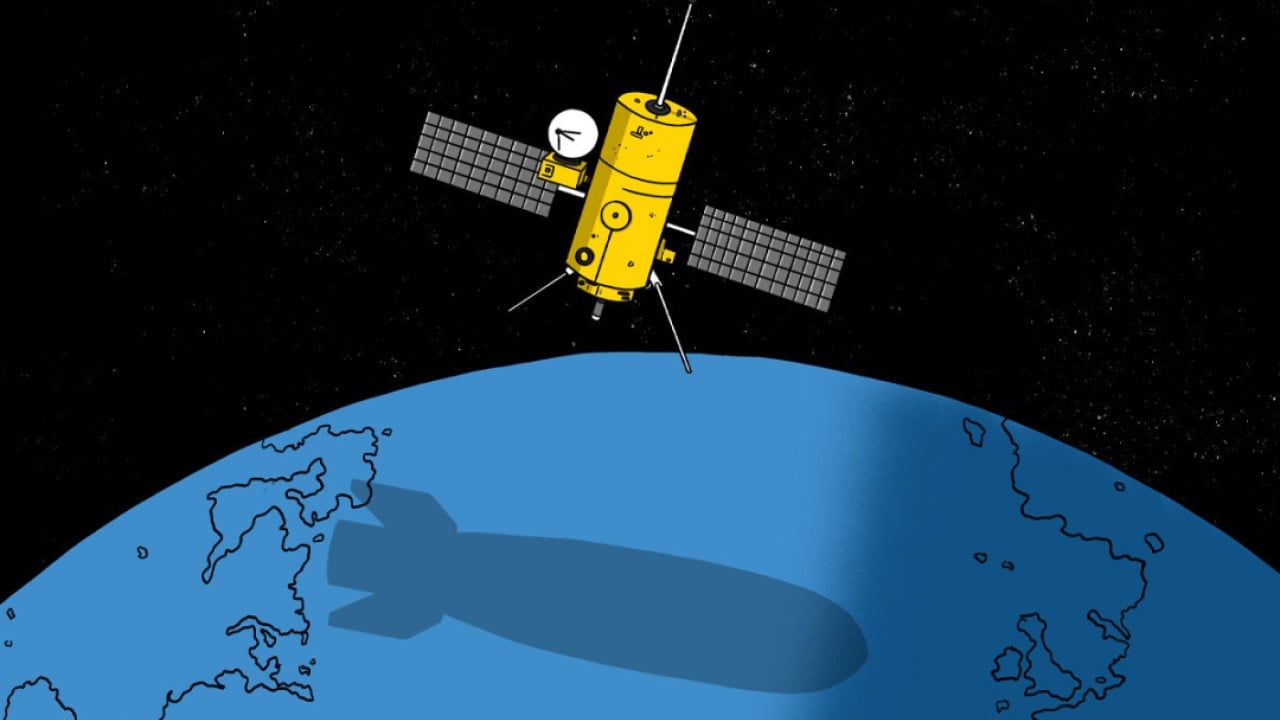
We used to look up at the stars and dream of unity. Now, nations look up and see a shooting gallery. Recent confirmations that the United States has deployed operational weapons into Earth's orbit have shattered any remaining illusions about keeping the final frontier demilitarized. Washington insists these orbital deployments are purely defensive measures meant to counter growing threats from Beijing and Moscow. But when you place offensive or interceptor capabilities into low Earth orbit, the distinction between defense and provocation vanishes entirely.
Let's look at the hard strategic reality. Once a weapon is already stationed in orbit, it has completely bypassed the traditional boost phase of a standard ballistic missile trajectory. Decision-making timelines shrink from minutes to seconds. If an adversary detects an orbital asset shifting position or appearing to target a satellite, they won't wait to find out if it's a routine maneuver. They will strike first. This compression of response time practically guarantees that any orbital skirmish will spiral into total global catastrophe, inevitably dragging nuclear arsenals into the mix.
Beijing has rightly criticized these moves, while simultaneously building up its own military space troops and crisis management units established back in 2024. Moscow is watching closely, ready to expand its own orbital countermeasures. But let's be honest with ourselves. China and Russia aren't innocent bystanders here. They have spent years testing co-orbital anti-satellite systems, robotic grappling arms, and electronic jamming tech designed to blind American surveillance assets. Every superpower is guilty of pushing humanity closer to the edge.
The real tragedy isn't just the risk of war. It's the destruction of the orbital environment itself. Low Earth orbit is already cluttered with thousands of active commercial satellites, scientific instruments, and dangerous space junk. If a kinetic conflict breaks out overhead, the resulting debris field will cascade uncontrollably. A single anti-satellite missile test or orbital explosion creates thousands of high-speed shrapnel bullets. Within days, key orbital shells could become completely unusable.
Think about what that actually means for daily life down on Earth. You rely on space infrastructure every single time you check your phone's GPS, track a global shipping container, monitor weather patterns for severe hurricanes, or execute high-speed financial transactions. Knocking out or disabling low Earth orbit networks plunges modern civilization back into the mid-twentieth century overnight.
Politicians love to frame the militarization of space as a matter of national prestige and security. They tell voters that dominating the high ground will keep the homeland safe. It's a comforting lie. Space is vast, interconnected, and fundamentally impossible to defend once debris or active warfare starts turning it into a zone of permanent hostility.
We need an urgent return to international arms control treaties specifically tailored for outer space. Not empty diplomatic rhetoric, but strict verifiable limits on orbital weapon deployments before the chain reaction becomes irreversible. Until leaders wake up to the reality that a space war leaves no victors, every nation on Earth remains a hostage to orbital escalation.
Review existing space policy frameworks, push local representatives to support multilateral orbital demilitarization accords, and demand transparency from defense contractors profiting off the next great geopolitical panic.