You look out over a vast expanse of deep blue ocean, and everything seems untouched. No soda bottles bobbing on the waves. No tangled fishing nets washed up on a shore. It feels pure. But looks can lie, especially when you are looking at the Sargasso Sea.
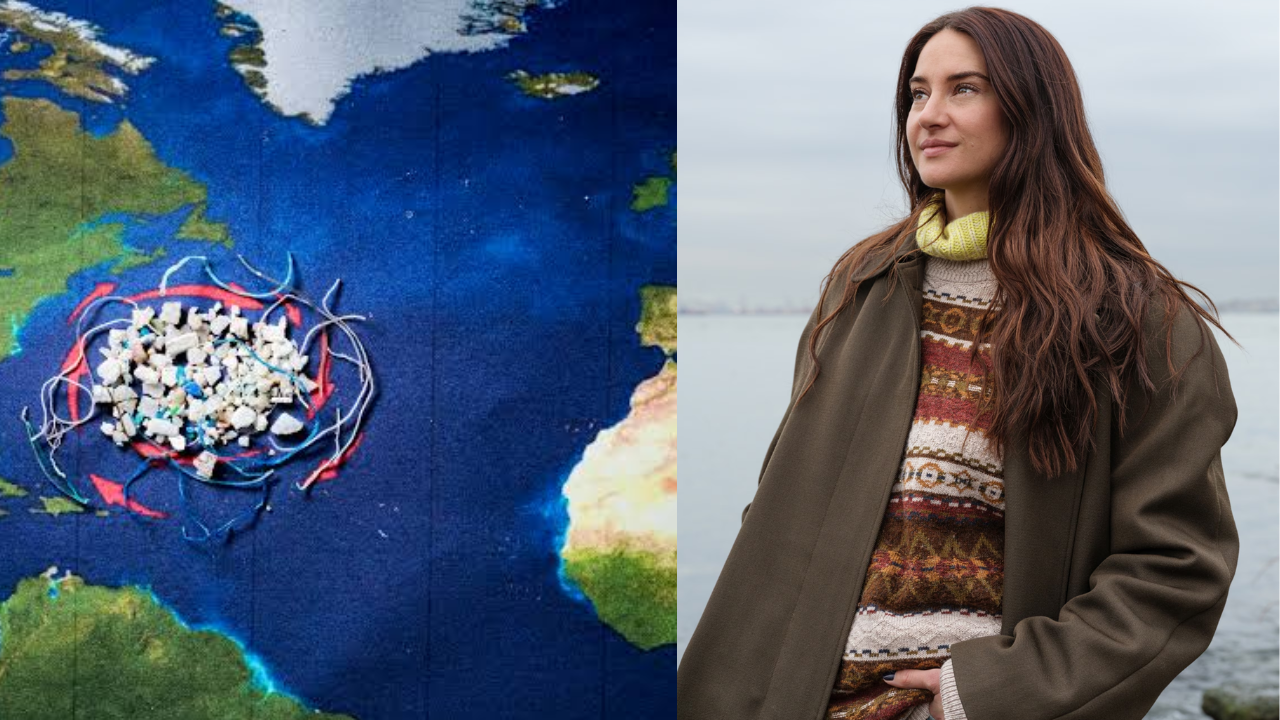
Way out in the middle of the North Atlantic, far from any landmass or busy shipping lanes, researchers and actress Shailene Woodley pulled up water samples that told a much darker story. One single sample contained a staggering 1,298 microplastic fragments. That is higher than counts recorded in the infamous Great Pacific Garbage Patch.
If you think plastic pollution is just a beach-cleanup problem, you are missing the entire point.
The Myth of Pristine Open Waters
Most people picture ocean plastic as floating islands of discarded consumer trash. They think of beaches buried in flip-flops and plastic bags. But the real crisis is invisible.
The Sargasso Sea isn't defined by a coastline. It is bounded entirely by swirling ocean currents known as the North Atlantic Gyre. These rotating currents act like a giant blender, pulling floating debris from thousands of miles away and trapping it in an open-ocean eddy.
As sunlight, waves, and salt water batter this trapped plastic over the years, it doesn't vanish. It fragments. It breaks down into microscopic particles smaller than a fingernail. You can swim right through millions of these toxic specks without ever seeing a single piece of visible trash.
That is why scientists call this remote region a real-world laboratory. It proves that our plastic addiction has poisoned every corner of the hydrological cycle, reaching places with no human population at all.
Why Shailene Woodley Demanded Answers
Celebrity activism gets mocked a lot, and usually for good reason. Stars show up for a quick photo-op, smile with a test tube, and fly private jets home. Woodley knew this trap well. Before signing on for the 2019 Greenpeace expedition, she asked hard questions. She wanted to know what would actually happen to the data once the boat docked.
She wasn't interested in a PR stunt. She wanted to build a legal case for the high seas.
Her time on the water wasn't about holding press conferences. It involved grueling manual collection work alongside marine biologists. They dragged fine-mesh nets through the water column, pulled up buckets of thick, floating Sargassum seaweed, and strained out the microscopic fragments hidden inside the ecosystem.
That hands-on labor turned into long-term political advocacy. Woodley didn't stop at the boat ride. She took the data straight to policymakers and United Nations officials, pushing hard for international treaties to protect waters outside national jurisdictions.
The Real Danger Hiding in the Weed
The Sargasso Sea is famous for its dense mats of floating brown Sargassum seaweed. In an open ocean where food and shelter are scarce, these drifting forests act as nurseries. Baby sea turtles, tiny fish, and unique crabs depend on these floating habitats to survive their earliest days.
Now, imagine those microscopic plastic particles mixing directly into the nursery.
Microplastics don't just float passively. They act like chemical sponges, soaking up toxins like heavy metals and persistent organic pollutants from the surrounding water. When small marine organisms ingest these particles, those toxins enter the food web.
Scientists are still racing to figure out the long-term biological damage. It is messy work. You cannot easily track every microplastic particle as it moves from a tiny crustam to a pelagic fish, and eventually up to larger predators. But the presence of nearly 1,300 fragments in a single bottle tells us the exposure levels are terrifyingly high.
What You Can Actually Do
You cannot personally sail out to the North Atlantic to scoop plastic out of a gyre. But you can stop feeding the cycle at home.
- Swap synthetic clothing for natural fibers like cotton, linen, or wool. Every time you run a load of polyester or nylon fleece through a home washing machine, thousands of microfibers shed into the wastewater treatment system and eventually make it out to sea.
- Cut down on single-use packaging entirely. Convenience culture drives the fragmentation crisis.
- Support international marine conservation frameworks like the High Seas Treaty. Local beach cleanups are great, but the laws governing international waters dictate whether remote ecosystems survive the century.
The next time you see a picture of a pristine blue ocean, remember what is hiding beneath the surface. The plastic is already there, broken down, waiting, and weaving its way through the food chain.