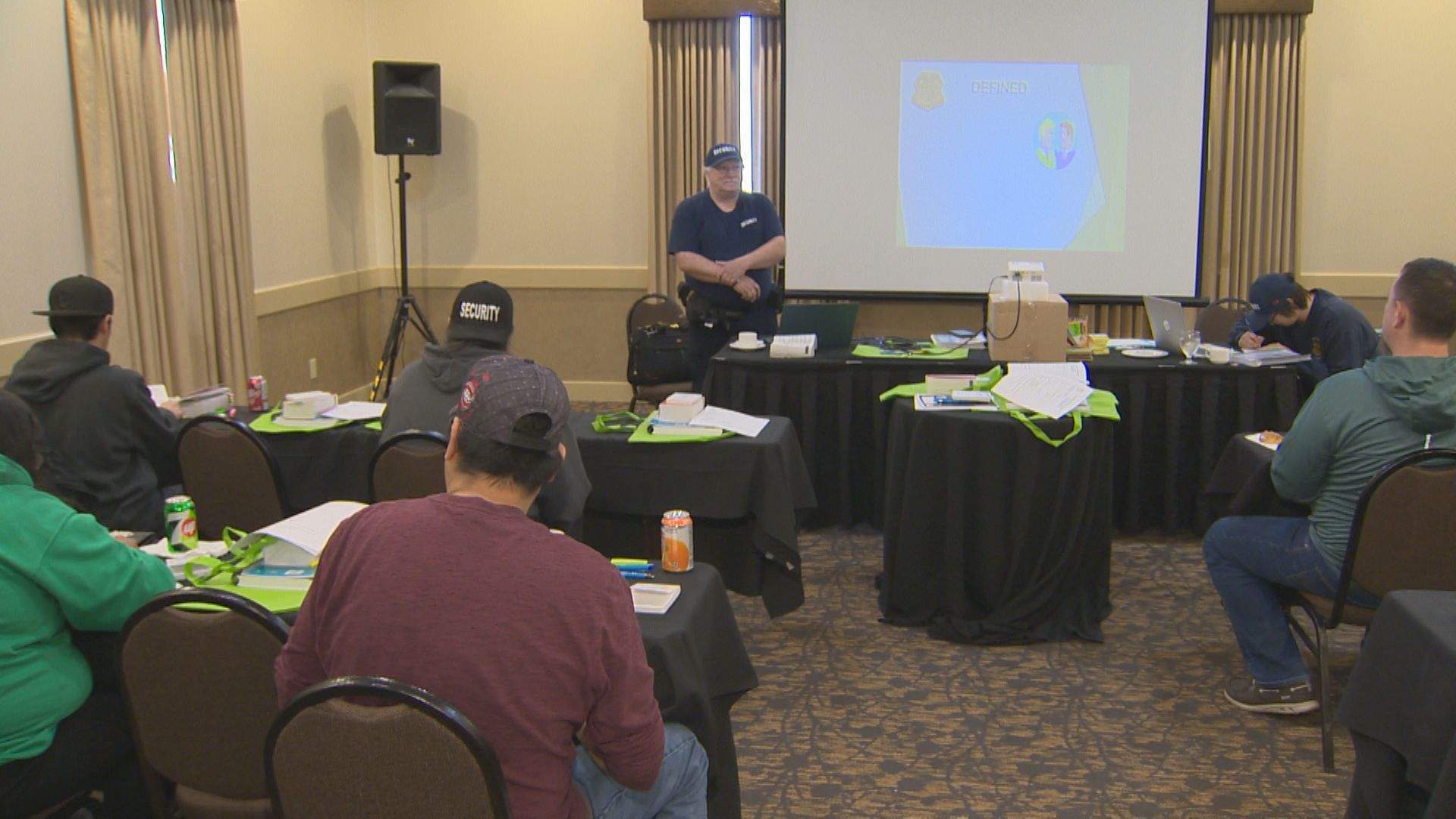
Forty hours in a quiet classroom is all it takes to earn a license to watch over public spaces, retail stores, and transit hubs. That model is outdated. The modern security guard training system belongs in a different century.
When you walk into a store today, you're not just seeing the occasional shoplifter. You're seeing open drug use, volatile mental health crises, and unpredictable street violence. Yet, the baseline preparation for frontline personnel hasn't kept pace with these daily realities. Veterans in the field and retail advocates agree that major overhauls are long overdue.
The Flaw in the Classroom Model
Right now, standard provincial guidelines mandate around 40 hours of basic instruction before someone can write a licensing exam. What happens after that? Nothing. Once licensed, guards can renew annually by paying a fee. There is zero mandatory re-certification or continuing education required to keep skills sharp.
Imagine treating a pilot or a police officer that way. We expect police officers to return for annual training on use of force, tactical communication, and legal updates. For security guards, who often act as the absolute first line of defense during an incident, once is supposedly enough.
Peter de Beer, a veteran instructor with decades of hands-on experience through de Beer Consulting & Security Inc., points out a massive gap in how conflict is handled. Under current setups, basic curricula heavily emphasize verbal de-escalation while pushing physical defense and handcuffing to post-licensing optional add-ons.
If a guard panics because they never learned safe physical control techniques under pressure, things escalate fast. Fear leads to overreaction. Proper physical training teaches restraint, safety, and proportion. Without it, guards are set up to fail the moment a situation turns physical.
Beyond the Basics: Cultural Competency and Street Realities
The streets have changed. Drug activity is higher, public desperation is visible, and storefronts have become makeshift social service hubs. Security professionals deal with human misery every single shift.
Indigenous community advocate Vivian Ketchum highlights what happens when real-world context enters the equation. After working as an ambassador at a downtown retail location following a high-profile incident, Ketchum saw firsthand how bridging cultural gaps changes outcomes. Simple shifts in attitude, perspective, and cultural understanding alter how guards see the public, and how the public sees guards.
Integrating cultural competency into baseline security curriculums isn't just a nice idea. It's a survival tool. Guards who understand community dynamics de-escalate tension before a punch is ever thrown.
Why Annual Recertification is Non-Negotiable
Rue Rodrigues from the Retail Council of Canada puts it bluntly. A guard might go months without facing a major physical confrontation. That sounds like a good thing until a crisis hits. When an emergency happens after six months of quiet shifts, muscle memory fails.
Police officers don't go years without touching a tactical training facility. Security guards shouldn't either. Annual re-certification for communication protocols, use of force standards, and legal boundaries should be mandatory for license renewals. Paying a fee shouldn't substitute for competence.
Provinces are starting to take notice. Regulators have hinted at updated curricula rolling out to match the changing environment. But updates on paper mean nothing if employers and regulators don't enforce continuous learning on the ground.
If you hire security, or if you work the door yourself, demand better standards. Push for ongoing training, insist on cultural awareness, and stop pretending a single 40-hour classroom stint prepares anyone for the modern front lines.