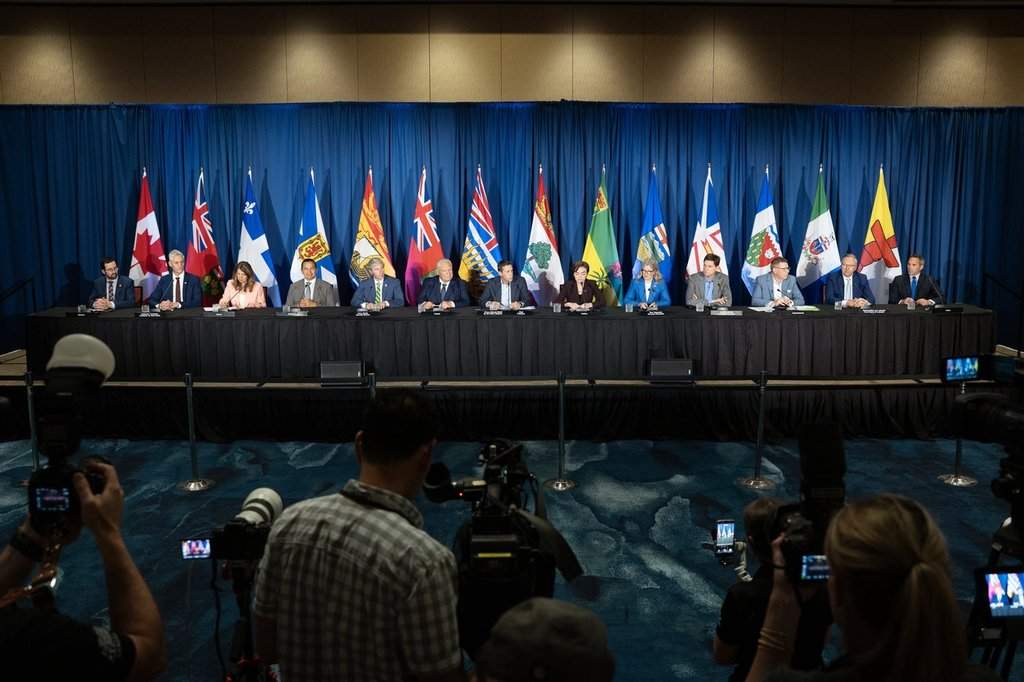
Albertans are heading to the ballots to weigh in on a massive slate of referendum questions, and the rest of the country is pretending not to notice. Premier Danielle Smith wants to upend the foundational rules of Canadian federalism. Her peers across provincial borders have decided the safest response is silence.
If you look closely at what is happening in provincial capitals from Victoria to St. John's, you will notice a wall of quiet indifference. Smith is pushing structural changes like abolishing the federal Senate, taking over the appointment of provincial judges, opting out of federal programs without financial penalties, and giving provincial laws priority over federal statutes. Most other premiers aren't biting. Some won't even pick up the phone to talk about it.
You cannot rewrite Canada's founding agreements easily. The amending formula requires intense multi-jurisdictional alignment, often demanding the agreement of seven provinces representing over half the population, or in some cases, total unanimity. Premiers know that opening up these thorny discussions is like pulling a loose thread on a cheap sweater. Everything unravels.
Why the Silence Makes Sense
Let us be honest about provincial politics. Every single premier has a domestic fire to put out. Housing crises, crumbling healthcare systems, and economic sluggishness occupy daily briefing rooms. Why would an Atlantic or central Canadian leader spend political capital debating Senate abolition or judicial appointments for Alberta?
There is also the classic trap of opening constitutional talks. Once you invite every province to the table, everyone brings a wish list. New Brunswick wants specific linguistic protections adjusted. Quebec wants distinct recognition hardened. Saskatchewan wants resource management overhauled. The whole enterprise bogs down in endless bickering before it ever reaches a vote.
Constitutional law experts point out that a couple of Smith's ideas actually carry logical appeal for provincial executives. Giving provinces control over judicial appointments or letting them opt out of federal programs without losing cash represents a net gain in provincial authority. Why wouldn't a premier want more power?
The hitch is Ottawa. Federal ministers have already slammed the door on handing over judicial control. The federal government will not voluntarily surrender its own leverage for nothing in return.
The Real Intent Behind the Ballot
Critics and political scientists argue that the constitutional queries are secondary theatre. Mount Royal University political scientist Duane Bratt has pointed out that the government's major advertising dollars and public speeches focus heavily on immigration grievances rather than deep constitutional mechanics.
Opposition politicians argue that the strategy is entirely performative. If Ottawa or other provinces reject these demands, the narrative writes itself. It feeds directly into long-standing western grievances about being ignored by the rest of Canada.
When you dig into the responses from territorial leaders, a pattern emerges. Yukon Premier Currie Dixon voiced a clear preference for keeping Alberta inside Confederation, noting the negative ripple effects of separation, while safely sidestepping the dense mechanics of constitutional reform. Northwest Territories and Nunavut leaders offered polite nods about monitoring outcomes while emphasizing shared resource struggles.
What Happens Next
If these questions pass on October 19, the real work begins—or stalls completely. Lobbying nine other provincial governments requires a level of diplomatic consensus-building that goes far beyond running a provincial referendum campaign.
You cannot simply demand sweeping changes to the constitution and expect compliance through sheer momentum. Without active partners willing to spend their own political lives backing the initiative, Alberta's ambitious reform package risks sitting on a shelf.
The quiet treatment from other premiers sends a loud message. They are watching the experiment unfold from a safe distance, waiting to see if voters actually bite, and hoping they will not have to deal with the fallout.


