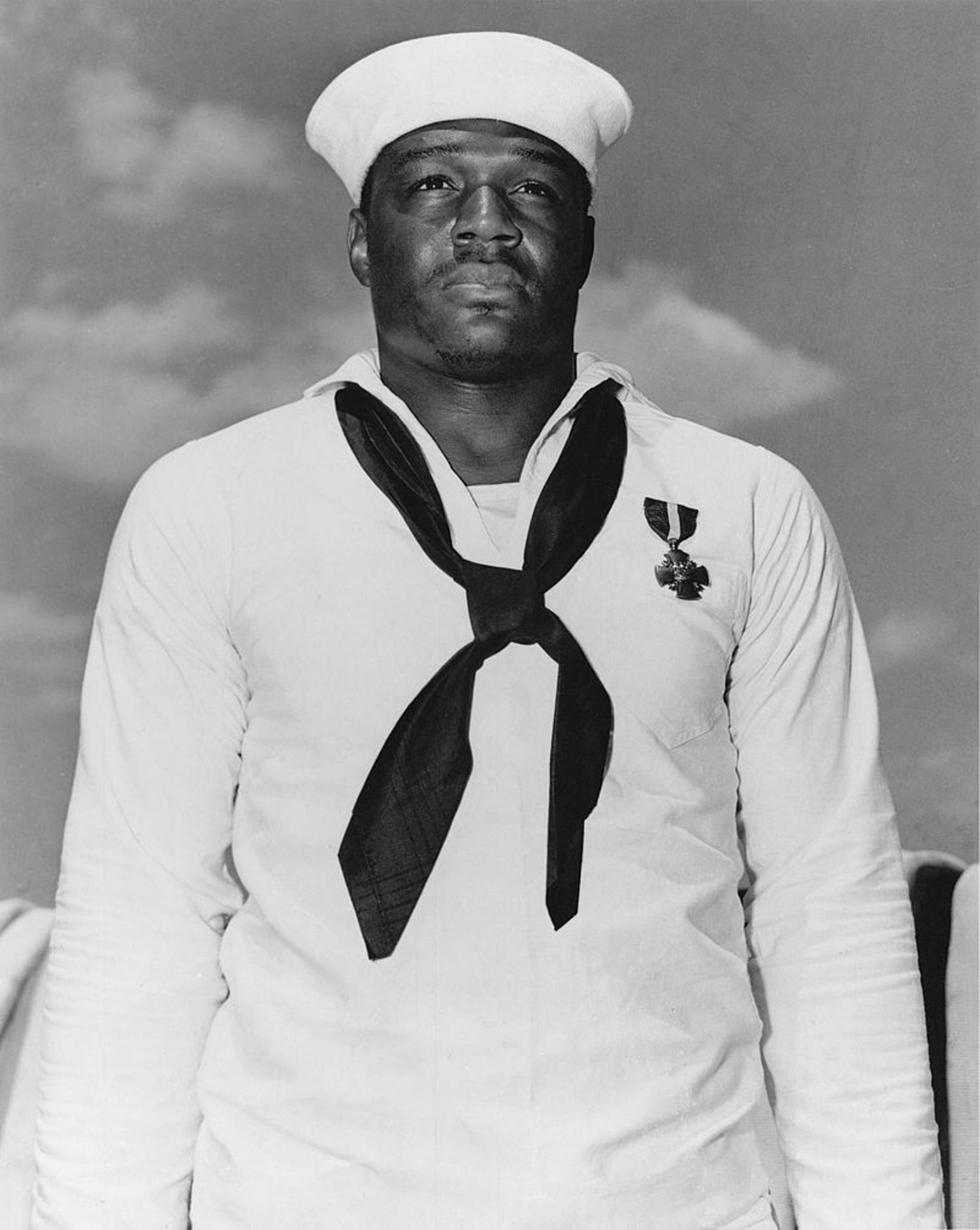
Lawmakers in Washington are once again locking horns over military tradition, naval designations, and presidential honors. New legislation has been introduced to stop any plans to strip a legendary Black war hero's name off a future aircraft carrier and replace it with Donald Trump's.
If you've been following military headlines lately, you know this fight centers on CVN-81. Back in 2020, the Navy made a historic choice. They announced that the nuclear-powered aircraft carrier would be named the USS Doris Miller. Doris Miller was a Black mess attendant during the Pearl Harbor attack who heroically manned an anti-aircraft gun under heavy fire, earning the Navy Cross. Naming a supercarrier after an enlisted sailor and an African American service member was a first for the military.
Fast forward to recent months, and reports surfaced that the Navy was weighing a shift. Under this possible pivot, the carrier would be named after Donald Trump instead, sparking an immediate political firestorm.
The Core Conflict Behind the Carrier Name
Tradition plays a massive role in how the United States Navy names its warships. For decades, aircraft carriers have typically honored U.S. presidents or prominent politicians, like the USS Abraham Lincoln or the USS Gerald R. Ford. Meanwhile, destroyers and other smaller vessels often carry the names of individual war heroes and Medal of Honor recipients.
That traditional dividing line is exactly why some defense traditionalists argued that Doris Miller should perhaps be honored on a different class of ship, while a president should take the carrier slot. But changing a ship's name mid-stream—especially one with the cultural and historical weight of the USS Doris Miller—doesn't happen in a vacuum. It triggers intense debates about race, military recognition, and political influence over the armed forces.
Lawmakers stepping in with new legislation want to freeze those plans entirely. They argue that breaking a commitment made to honor a groundbreaking Black American sailor is a step backward. Furthermore, critics point out that naming a major warship after a sitting or recently active president while overriding an established designation sets a thorny precedent.
What Happens Next for CVN-81
Construction on the Gerald R. Ford-class aircraft carrier isn't slated for completion until deep into the 2030s. That leaves plenty of time for legislative battles, administrative reversals, and public outcry to shape the final outcome.
Right now, the pushback from Capitol Hill is designed to tie the Navy's hands and protect the Doris Miller designation. Whether these legislative blocks survive committee votes and floor fights depends entirely on how the political winds shift in Congress. What started as a routine naval administrative decision has turned into a high-stakes test of political muscle and historical legacy.
Keep an eye on defense policy markups in the coming months. This isn't just about a name painted on steel. It's a snapshot of how modern politics collides with military tradition.