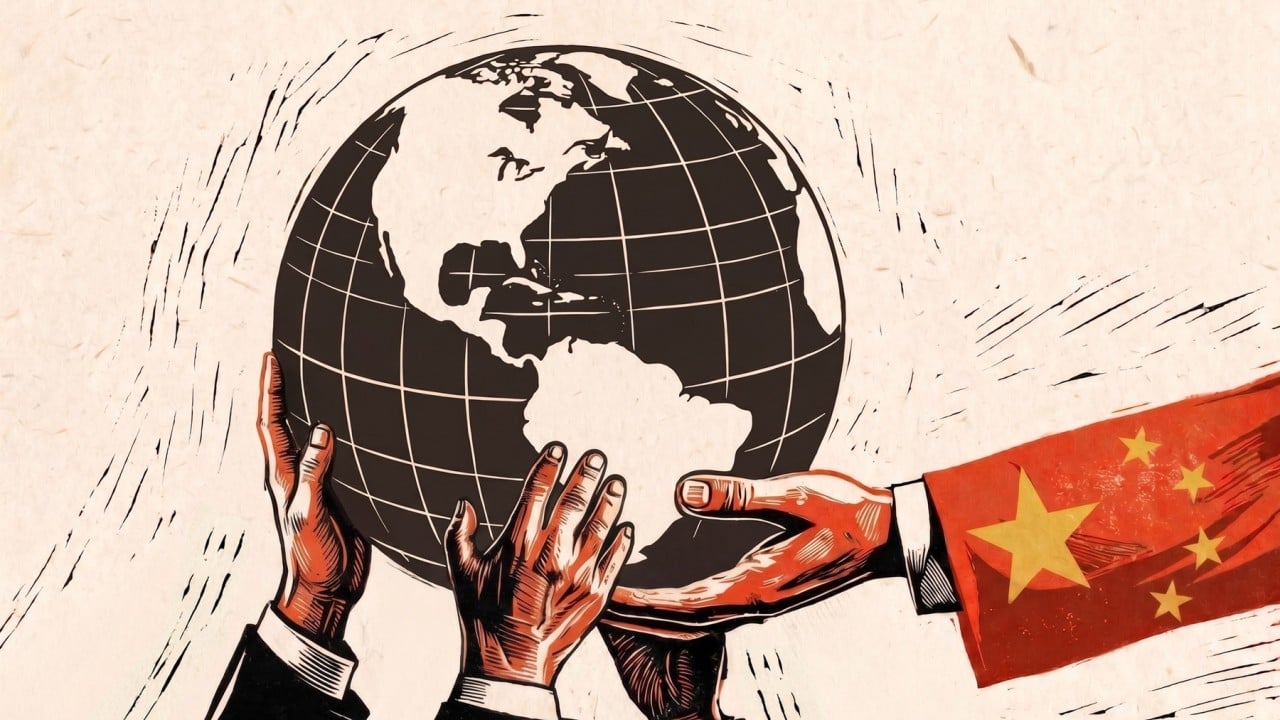
For decades, the dictionary definition of a global heavy hitter was simple: build massive aircraft carriers, plant military bases across continents, and dictate terms to smaller nations. Washington wrote that playbook after World War II. Back in 1944, political scientist William T.R. Fox coined the term "superpower" to describe nations with exceptional military reach and the singular ability to project power across oceans. But Beijing isn't playing that old game anymore.
Instead of chasing the traditional blueprint of military dominance, China is rewriting the playbook from the ground up. It's pushing a different narrative about international influence, one that swaps out hegemony for trade networks, infrastructure investments, and diplomatic framing. If you want to understand where modern geopolitics is heading, you have to look past the aircraft carrier counts and examine how Beijing is systematically shifting the goalposts of global leadership.
The Problem With the Old Definition
Traditional definitions of global status rely heavily on hard power. If a nation can’t drop a battalion anywhere on earth within twenty-four hours, standard Cold War metrics say it doesn't make the top tier.
That framework is outdated. Economic interdependence, digital supply chains, and green energy technology dictate modern statecraft far more effectively than gunboat diplomacy ever did. When you look at how nations interact today, military bases matter less than who controls the rare earth minerals powering tomorrow's electronic grids. Beijing recognizes this shift clearly.
Official rhetoric from Chinese state organs rarely uses the terms "great power" or "superpower" in the traditional Western sense. Instead, the preferred translation points to a "major country" status. That distinction isn't just semantic footwork. It reflects an entirely different philosophy of what state power is supposed to achieve in the twenty-first century.
Trading Gunboats for Supply Chains
Think about how influence actually functions on the ground in places like Southeast Asia, Latin America, or Sub-Saharan Africa. Local leaders aren't usually looking for lectures on democratic governance or joint military exercises. They want ports, railways, digital payment infrastructure, and reliable trade partners.
By anchoring its international strategy around massive development frameworks, China exercises profound global reach without making military domination the organizing principle of its foreign policy. It's an approach that appeals directly to developing economies tired of being treated as collateral damage in superpower rivalries.
Of course, this strategy carries its own tensions. Critics point out that massive infrastructure loans can create debt traps or sovereign leverage issues. That's a legitimate concern. Yet, from a structural standpoint, it fundamentally alters how smaller nations view external influence. When a country builds your highways and buys your agricultural exports, its footprint feels very different from a nation parking an aircraft carrier off your coast.
Multilateralism With Chinese Characteristics
Another pillar of this transformation involves reshaping global governance institutions from within. Rather than tearing down the existing post-war international architecture built by Western allies, Beijing prefers to work inside it while creating parallel systems.
Look at institutions like the Asian Infrastructure Investment Bank or the expansion of BRICS. These organizations don't seek to instantly replace the World Bank or the International Monetary Fund. Instead, they offer alternatives, shifting financial gravity away from Washington and New York.
This dual-track strategy lets China project stability while positioning itself as the champion of a multipolar world. When Western capitals experience political turbulence or shifting policy priorities, Beijing steps into the vacuum, pitching itself as a reliable, long-term anchor for global trade and governance.
What This Means for the Future
The competition for global leadership isn't going to be decided by who has the most nuclear warheads. It will be decided by who can write the rules of the digital economy, secure critical supply chains, and offer a more appealing vision of international order.
If you're still measuring national strength by twentieth-century standards, you're missing the entire board. Beijing is changing the rules of engagement while everyone else is still arguing over the old scorecards. Watch the trade corridors, the tech standards bodies, and the financial clearinghouses. That's where the real contest is happening.