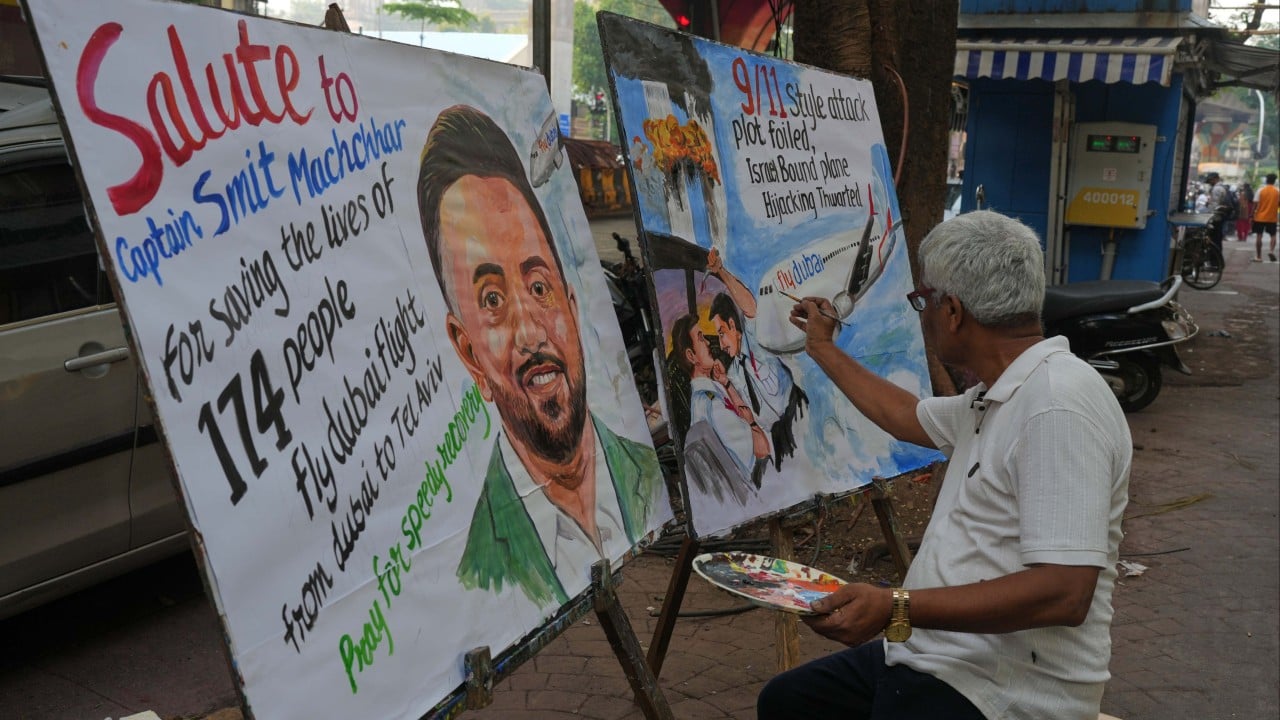
You don't expect a colleague to turn on you at 35,000 feet. Commercial aviation relies entirely on trust, strict protocols, and shared survival instincts. But when a Flydubai flight bound for Tel Aviv descended into absolute chaos following an unprovoked cockpit attack, everything changed in a heartbeat.
At the center of this terrifying ordeal is Indian pilot Captain Smit Machchhar. While recovering in an Abu Dhabi hospital with bandaged wounds and medical tubes, Machchhar recalled the harrowing moments he had to fight for his life to prevent a catastrophic crash.
The Midair Nightmare
The incident unfolded on a routine flight when the co-pilot launched a sudden assault inside the cockpit. Machchhar sustained severe injuries and collapsed on the flight deck. As blood loss mounted and pain set in, the aircraft began a dangerous, uncommanded descent.
"I had fallen down," Machchhar said during a video call with Indian Prime Minister Narendra Modi. "I was fighting for my life. At one point, I realized that if I didn't get up... then passengers would lose their lives."
Having logged thousands of flight hours over a career spanning more than a decade—including years with Indian low-cost carrier SpiceJet—Machchhar possessed an acute spatial awareness of his aircraft. Even while severely wounded, he could sense the jet plummeting toward the ground. Summoning a final surge of physical and mental strength, he forced himself back onto his feet to regain control of the flight deck before the situation passed the point of no return. Passengers and crew members also intervened in the cabin, helping to subdue the attacker and secure the flight before it diverted safely to Tabuk in northwestern Saudi Arabia.
Why Standard Training Falls Short
Aviation authorities design safety manuals to handle engine failures, severe weather, and hydraulic leaks. They plan for turbulence, bird strikes, and instrument malfunctions. Yet, training regimens rarely account for a violent assault by a fellow crew member seated right beside you in a locked cockpit.
Philip Kean, head of Mainland Air in New Zealand where Machchhar once trained, admitted that airline handbooks leave a massive blind spot for this exact scenario. You sit next to a colleague, share coffee, and trust them with your life. Nobody expects someone sitting across the controls to try to destroy the plane.
This terrifying event has forced global aviation regulators and airlines to re-examine cockpit security protocols. For years, the primary focus has been keeping unauthorized people out of the flight deck. Now, airlines must confront the nightmare scenario of an insider threat where the danger originates from inside the fortified door.
The Aftermath and Global Praise
Leaders around the world quickly recognized the extraordinary bravery required to pull off that recovery. Prime Minister Narendra Modi praised Machchhar's valor, noting that his quick thinking and resilience averted a massive tragedy. SpiceJet, his former employer, celebrated his heroic courage and selfless actions.
Despite the physical trauma and the grueling road to recovery ahead, Machchhar's mindset remains remarkably resilient. He doesn't view his injuries as a permanent setback, but rather as part of an ongoing journey.
Commercial aviation remains one of the safest modes of transportation on earth, largely because of the split-second decisions made by professionals when things go wrong. Captain Machchhar's refusal to stay down saved hundreds of lives and set a new benchmark for courage under fire.
Take a moment to appreciate the invisible layers of protection standing between routine travel and absolute disaster. Support rigorous safety reforms and demand that airlines close the dangerous gaps in cockpit security before the next crisis hits.